Tunisia’s Djerba Island Quietly Rivals Sicily for Mediterranean Wanderers

The Island That Mediterranean Travelers Keep Overlooking
Djerba sits off the southern coast of Tunisia like a well-kept secret, connected to the mainland by a Roman-era causeway that has carried travelers across the Gulf of Gabes for centuries. While Sicily dominates the Mediterranean travel conversation with its Baroque cathedrals and Michelin-starred seafood, Djerba quietly offers much of the same – ancient layered history, North African light that turns everything gold by late afternoon, and a coastline where the water runs shallow and startlingly clear. The island rarely appears on the same shortlists as Capri or Santorini, which is precisely why it keeps rewarding the travelers who find it.
What makes the comparison to Sicily more than a stretch is the shared quality of cultural density. Both islands absorbed Phoenician traders, Roman administrators, Arab navigators, and medieval conquerors, leaving behind an architecture and cuisine that doesn’t belong neatly to any single tradition. Djerba packs that same accumulated strangeness into roughly 514 square kilometers – small enough to cross by bicycle, layered enough to spend a week unpacking.
A Landscape Built From Multiple Worlds
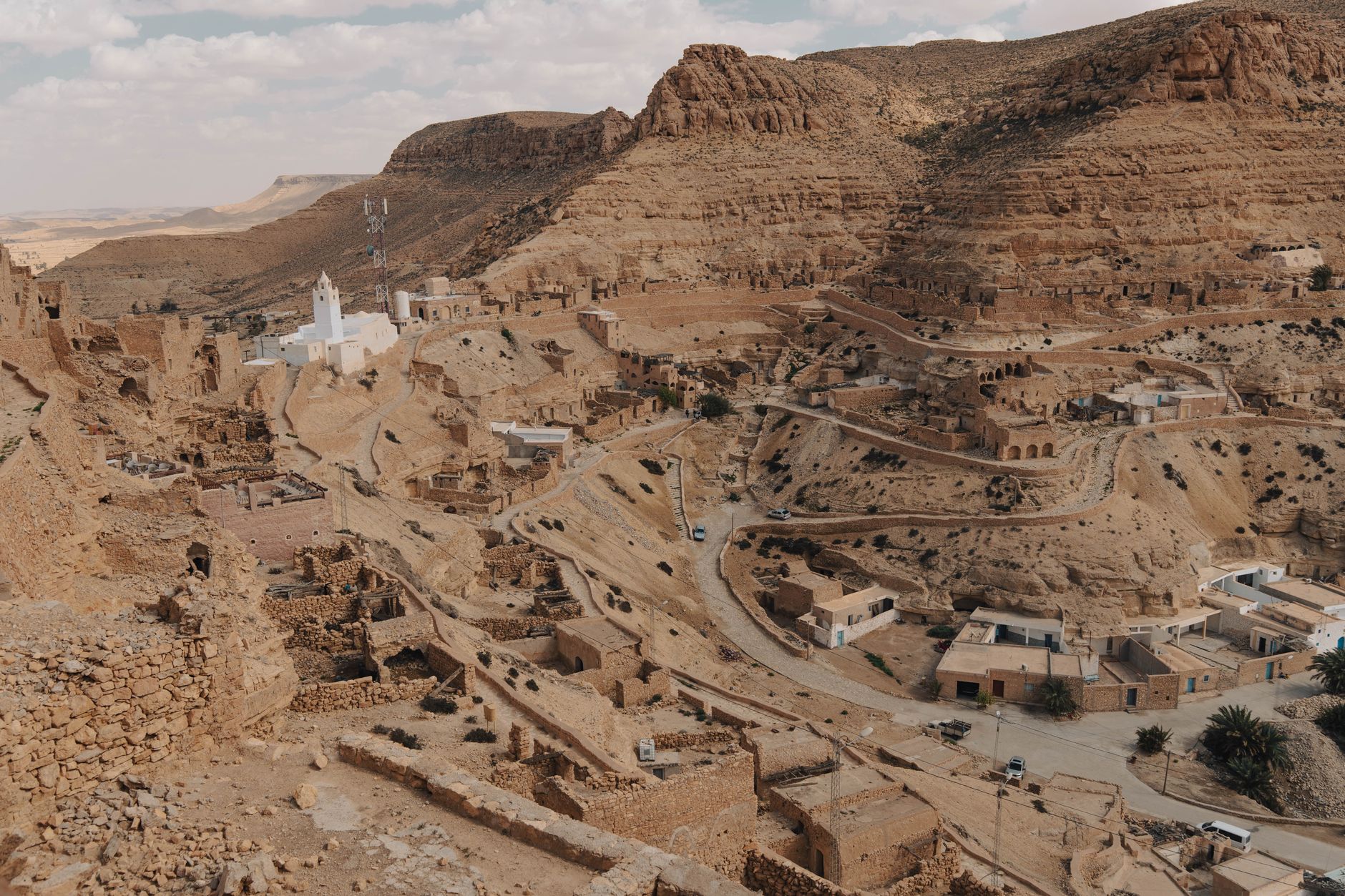
The island’s interior is nothing like the beach-resort fringe that lines its eastern coast. Inland, the landscape flattens into groves of olive and palm trees interrupted by whitewashed village walls that absorb the heat. The architecture follows a distinctly Djerbian logic – windowless exterior facades that face the street, with life organized entirely around interior courtyards. It reads as austere from the road and revelatory once you step through the right doorway. This same design principle runs through the island’s historic mosques and the fortified synagogues of the Hara Sghira neighborhood, where one of the oldest Jewish communities in North Africa has maintained continuous presence for well over two thousand years.
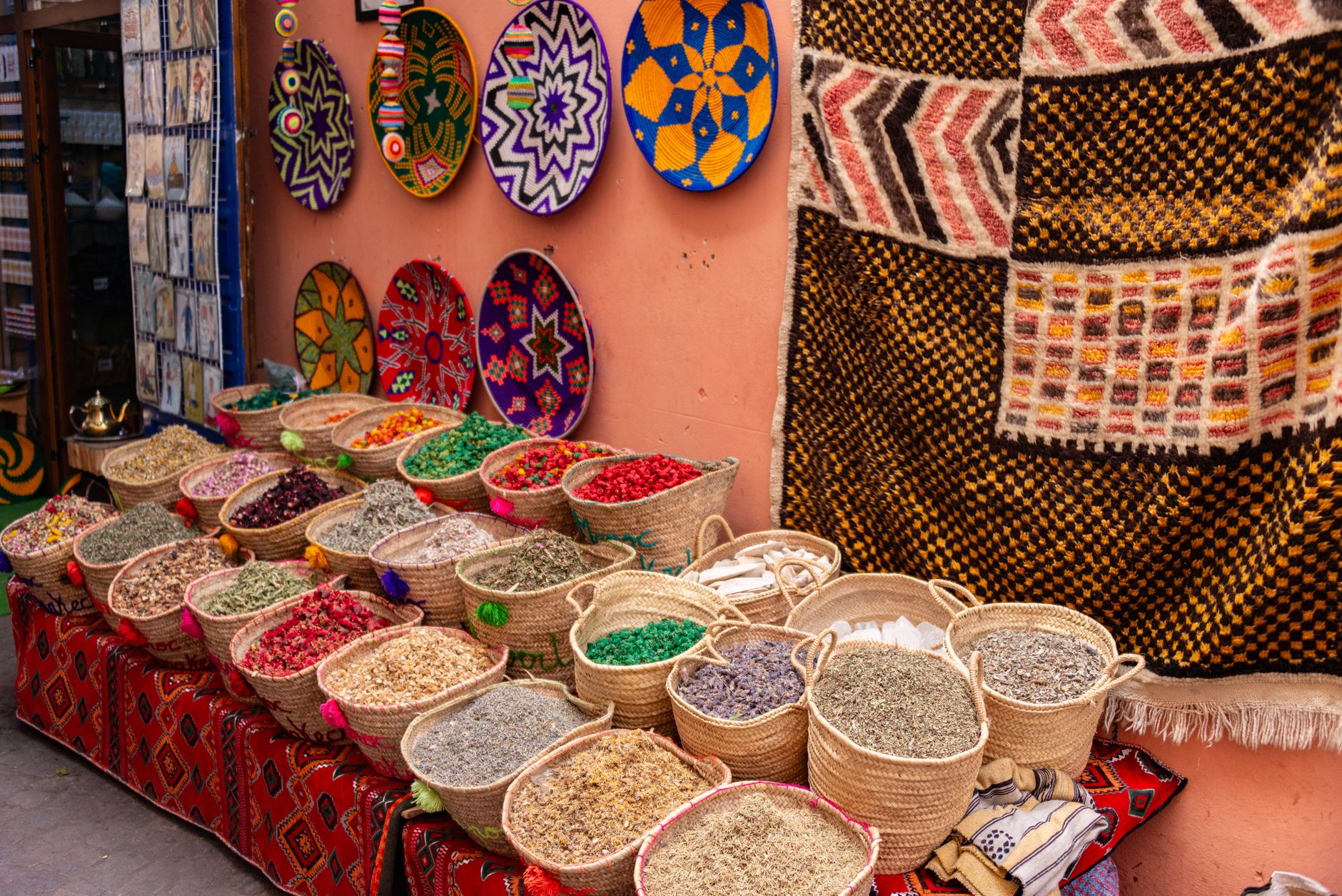
Houmt Souk, the island’s main town, functions as both a working port and an open-air museum without the velvet ropes. The central market sells sponges hauled up from the seabed alongside hand-woven wool blankets in the same earthy reds and oranges that appear on centuries-old Djerbian pottery. The Ottoman-era fondouks – caravanserais repurposed as craft workshops and small hotels – give the streets a texture that no amount of boutique renovation could manufacture. Wandering through them on a weekday morning, when the light is still low and the trade is genuinely local, produces the rare sensation of having arrived somewhere before the moment passed.
The Ghriba synagogue, located in the village of Er-Riadh, deserves a separate visit entirely. Dating its origins is contested – local tradition places the founding stone as far back as the destruction of the First Temple – but the building standing today is largely 19th century, with a blue-and-white tiled interior that feels closer to a Moroccan hammam than a European synagogue. Each spring it draws Jewish pilgrims from across North Africa and the diaspora for an annual festival that has no real equivalent anywhere else in the Mediterranean. The mixture of religious observance, family reunion, and street celebration that takes over the village for those days is worth planning around.
The Coast, Honestly Assessed
Djerba’s beach tourism infrastructure is real and, in places, fairly blunt – a northern stretch of all-inclusive resorts built during the 1970s and 1980s boom that changed the island’s economic profile permanently. Anyone expecting uniformly pristine coastline will need to navigate past that corridor. But the island’s southeastern shore, around the zone of Sidi Mahrez and the quieter stretches toward Aghir, offers something closer to the Sicilian fishing-village aesthetic that travelers pay a premium to access on the Aeolian Islands. The water is shallower here than much of the central Mediterranean – the Gulf of Gabes is famously warm and calm – which makes it unusually good for anyone who finds the open sea more exhausting than relaxing.
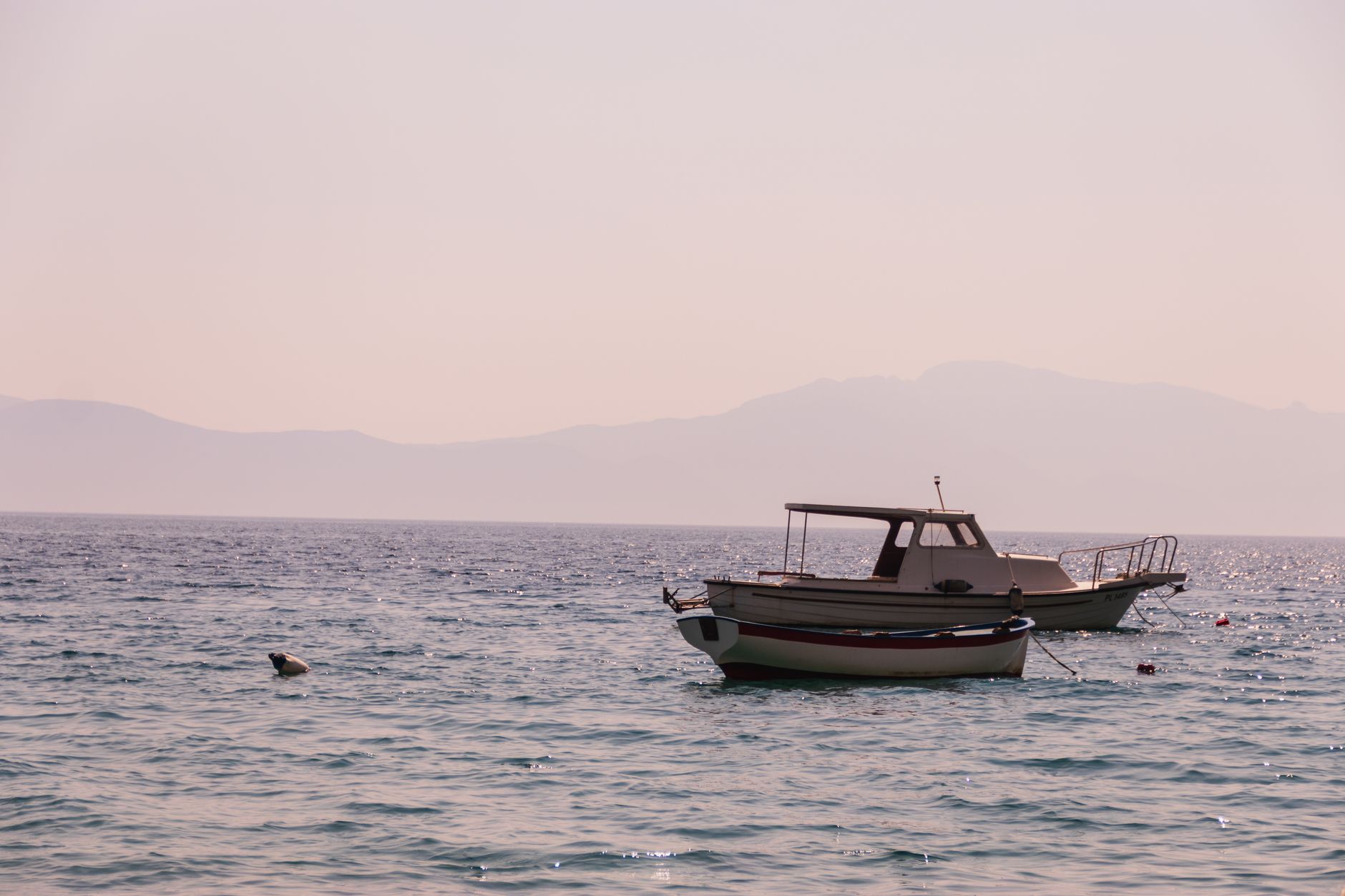
Fishing remains an active industry rather than a photographic prop. Small wooden boats painted in the same blue and white that colors the island’s walls go out before dawn and return mid-morning, and the catch moves directly into the market stalls of Houmt Souk. The distance between the water and the plate is genuinely short here, which matters when you’re eating grilled sea bream with nothing on it except olive oil from trees that grew three kilometers away.
Why Djerba Holds Up Against the Comparison
The standard objection to placing Djerba alongside Sicily is infrastructure – air connections, tourist amenities, the general ease of travel that wealthy Western visitors tend to assume. It’s a fair concern that dissolves on closer inspection. Djerba-Zarzis International Airport receives direct flights from major European cities throughout the year, with frequency increasing sharply in summer. The island’s road network is straightforward to navigate by rental car or moped, the latter being the more honest way to experience an island this flat. A growing number of guesthouses and restored riads offer accommodation that competes on quality with anything available in comparable Sicilian towns, often at significantly lower daily rates.
The food argument in Sicily’s favor is real but narrower than its reputation suggests. Djerban cooking works from a different pantry – harissa, preserved lemon, tuna that gets packed into clay jars and aged – and the results are distinct rather than inferior. Brik, a fried pastry typically filled with egg and tuna, is the kind of thing that takes thirty seconds to explain and fifteen years to stop thinking about. The island also produces its own olive oil, dates, and a local wine tradition that gets less attention than it deserves, partly because Tunisia’s tourism industry has historically underplayed its food identity in favor of beach photography.
What Djerba offers that Sicily structurally cannot is a lower tourist baseline. Sicily receives millions of visitors annually; Djerba receives a fraction of that, which means the physical fabric of the island has not yet been reorganized around visitor expectations. The Hara Kebira, the larger of the island’s two historic Jewish quarters, still functions as a neighborhood rather than a heritage zone. Shops that sell hardware and plumbing fixtures share streets with weaving workshops and spice sellers. That kind of unmanaged coexistence is increasingly rare anywhere in the Mediterranean and genuinely impossible to manufacture once it’s gone.
The honest tension is political context. Tunisia has navigated a difficult decade since the 2011 revolution, and the country’s tourism industry took serious hits following security incidents in 2015 that affected traveler confidence broadly. Djerba itself was not the site of those events, but the association changed booking patterns for years afterward. A 2023 attack near the Ghriba synagogue during the annual festival renewed some of those concerns. Travelers weighing the destination will encounter that history in any honest accounting – and some will decide it changes the calculation. Those who go anyway tend to find an island that is, for all of these complicated reasons, less crowded than it should be at this quality level, which is either the best advertisement Djerba has or the most uncomfortable one.